
El Monte Resident Lookup Records
There is no single El Monte resident roll. That distinction is the starting rule for an El Monte resident lookup. The Los Angeles County Assessor can establish a situs address, 10-digit AIN, legal description, and property characteristics, while owner names and mailing addresses are suppressed from the public web parcel card. The Registrar-Recorder/County Clerk, or RR/CC, holds recorded instruments by grantor, grantee, and recording year. Its pages refer to holdings since 1850 and also use 1851 for index coverage, so retain both dates when planning older research.
| Record | What It Confirms | Where | Access |
|---|---|---|---|
| Assessor parcel detail | Address, AIN, legal description, land and building traits | LA County Assessor Portal | Free web view; owner suppressed |
| Recorded instrument | Named grantor or grantee tied to a parcel and date | Los Angeles County RR/CC | Norwalk index and ordered copies |
| Court docket | Party, case number, role, date, status, and public register entries | LA Superior Court | Separate systems; fees and limits vary |
| Voter status | One person’s own registration status | LA County verification | Four matching fields; self-use |
| Vital record | Event identity, date, place, and copy category | CDPH Vital Records or RR/CC | Authorized and informational rules |
| Business or license filing | Entity, officer, licensee, status, or public discipline | SOS bizfile and DCA | Free public search; output varies |
Choose the first source by the fact already in hand. An old address points toward the AIN and deed chain. A case concern points toward the correct court silo. A family event points toward RR/CC or CDPH, where the relationship and copy type control access. For a street-led search, move from the AIN into the El Monte street directory workflow rather than treating a name result as proof of residence.
Build an El Monte Resident Match
A name hit is a lead, not an identity. A careful resident lookup matches at least two independent facts before joining records. Useful anchors include a full middle name or initial, a stable AIN or legal description, a consistent city and ZIP, a license number, a case date, a spouse or associate, or a party role. A parcel can show where land sits without showing every person who lives there. A court index can show a party without supplying a reliable birth date.
El Monte searches also need spelling care. Try compound Spanish surnames, married and maiden forms, hyphens, initials, and Chinese name-order or romanization variants one at a time. Trusts, businesses, and registered agents can appear in place of an individual. Preserve the exact spelling, record ID, URL, and date searched so a later correction goes to the right custodian.
Run the match in a fixed order:
- Save the exact name, spelling variants, place, and date from the first lead.
- Anchor the name to an address or AIN, while keeping an owner separate from an occupant.
- Confirm the court role, case type, vital event, business filing, or license number in a second source.
- Stop when a source is sealed, redacted, or outside its stated purpose, then correct the record with its custodian.
Search El Monte Court Records
Los Angeles Superior Court access is split into civil, family, probate, small claims, criminal, and traffic systems. It is not a universal resident search. For a resident lookup involving a case, check the courthouse locator by case type and ZIP because filing venue cannot safely be inferred from the words El Monte. Civil party search has its own fees or account conditions, and a family, probate, criminal, or traffic result may use a different service.
| Search field | Use |
|---|---|
| Last Name / Company Name | Required surname or entity-name field |
| First Name | Conditional field that narrows common surnames |
| Middle Name | Optional field for disambiguation |
| Search type or case grouping | Varies by the separate civil, family, probate, criminal, or traffic service |
The LA Superior Court civil party search is the relevant name interface for civil matters. Search spelling variants separately, then confirm the courthouse, filing date, party role, and case status. The live research did not yield a stable anonymous sample result, so current buttons, fees, and document availability should be checked before an order.
The Los Angeles Superior Court portal separates criminal, family, probate, traffic, and records services for El Monte matters.
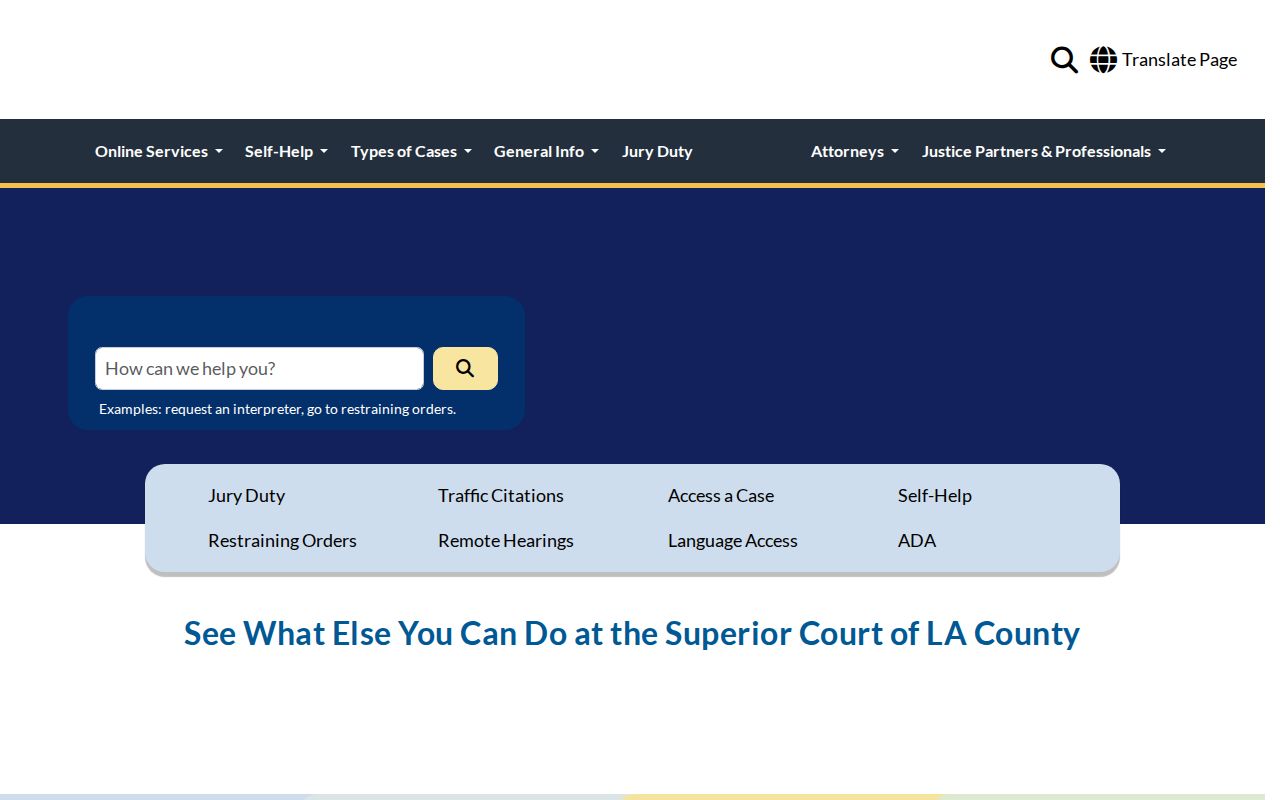
That separation keeps a civil party search from being mistaken for a complete court history.
Read an El Monte Resident Docket
A docket is the court’s running list of a case. A public result may show the case number, courthouse or judicial district, filing date, case type, status, parties, roles, counsel, and register-of-actions entries. It may show an event or document title without opening the document image. Sealed cases, juvenile matters, confidential mental-health records, adoption records, and protected family-law papers do not become public because a name is known.
Federal matters remain separate. The Central District of California covers Los Angeles County, and federal electronic access runs through PACER. PACER charges $0.10 per page, generally caps a document at $3, and provides a quarterly fee-waiver policy. An account is required. Bankruptcy has its own court system even when a related party appears in a federal search.
A useful docket inventory has five parts. Check the case number and courthouse first. Then note the filing date and case type, followed by party names and roles such as plaintiff, defendant, or petitioner. Read the dated register-of-actions entries for filings, hearings, and any public disposition detail. Finally, check whether the document image is online, fee-gated, clerk-only, or unavailable.
- Placement: case number, courthouse, and judicial district.
- Identity: filing date, case type, parties, roles, and counsel.
- Activity: register dates, event or document titles, hearings, and public disposition.
- Access: metadata may be visible while an image remains restricted or unavailable.
- Docket
- The court’s running case list, including dates, filings, hearings, and other public activity.
- Index versus image
- An index or docket row describes a record; an image is the underlying paper and may be fee-gated, clerk-only, or unavailable.
- Certified copy
- A copy issued and authenticated by the record custodian, not a screen view or an ordinary printout.
The Central District of California identifies the federal court route for an El Monte matter.
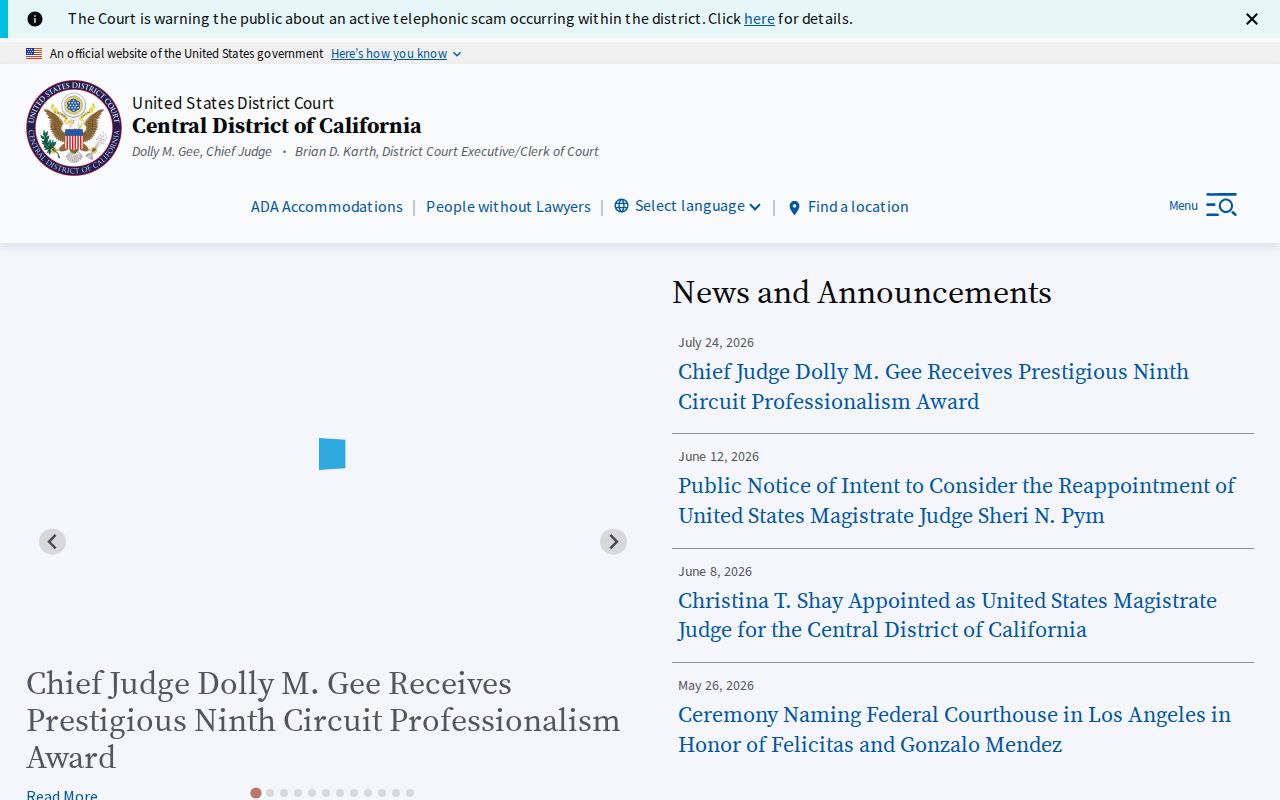
Use the district court source to confirm jurisdiction, then use the PACER search service for the federal docket.
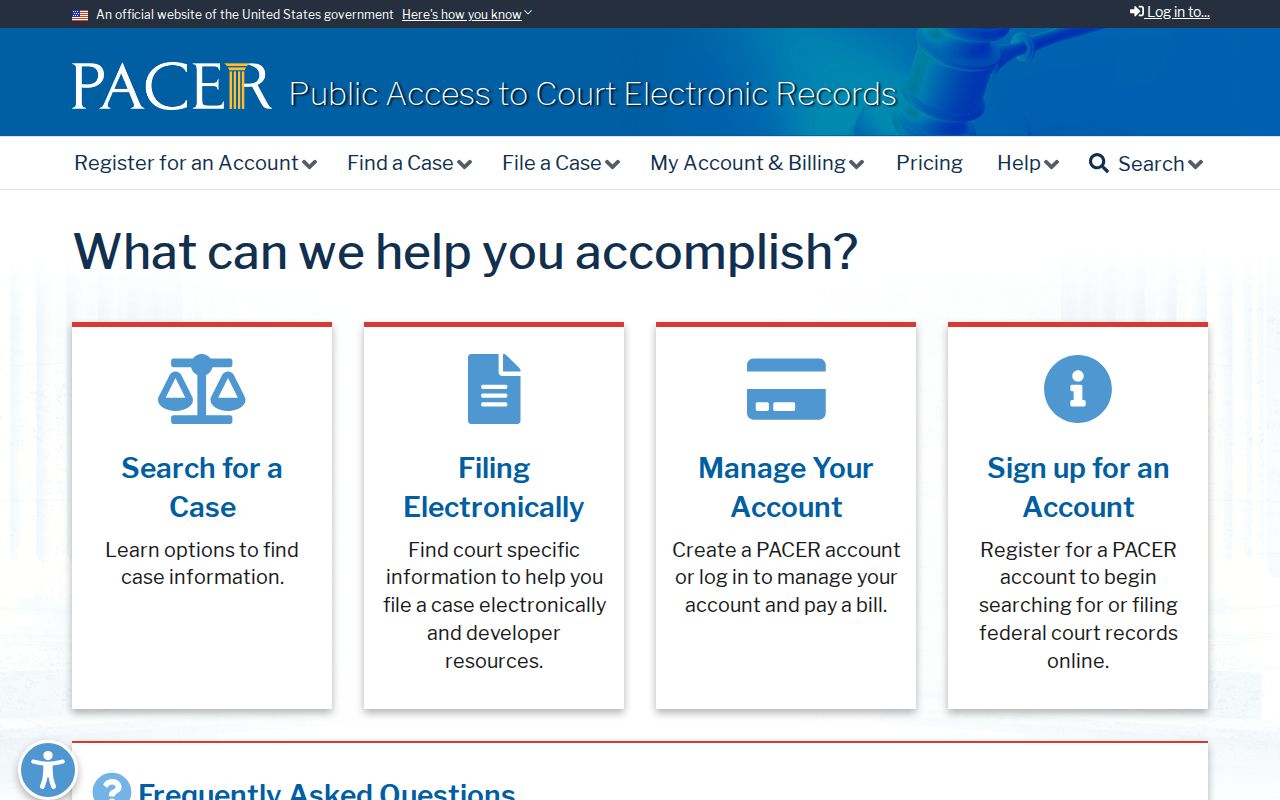
The federal image reinforces the difference between a public case index and a complete file.
El Monte Voter Records Verification
LA County’s voter page determines your own registration status. It is not a browse-by-name, ZIP, or street directory. The form asks for last name, birthdate, house number, and ZIP. All four fields are needed, and the page lists 800-815-2666, option 2, for help. The public self-check cannot reveal nearby voters.
- Last Name: required, alphabetic only.
- Birthdate: required, in mm/dd/yyyy format.
- House Number: required, numbers only.
- Zip Code: required, numbers only.
The LA County voter verification form is the right path for a person checking their own status. This limit keeps a resident lookup from becoming a browse-by-name voter list. Elections Code sections 2188 and 2194, plus Government Code confidentiality provisions, restrict home address, phone, email, precinct identifiers, prior registration data, driver or ID numbers, Social Security numbers, and signatures.
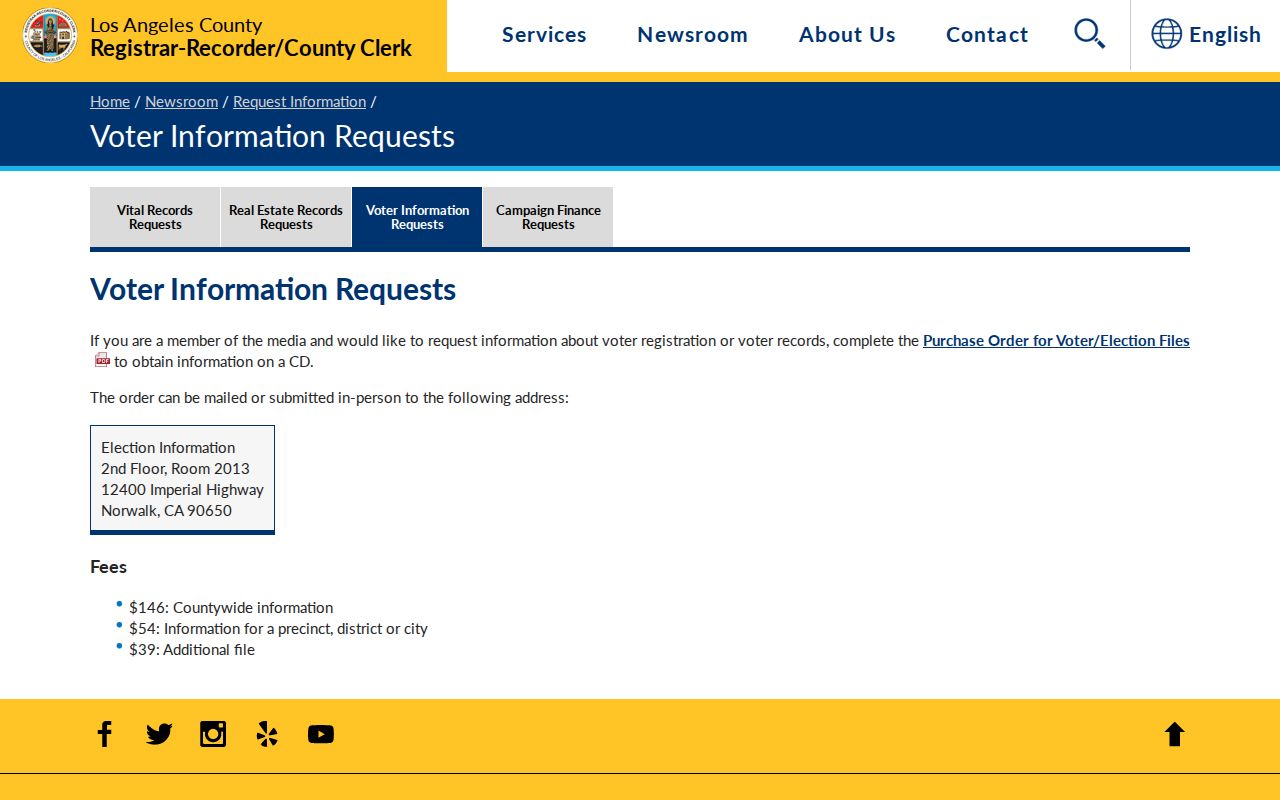
Broader voter products require a statutory purpose and a signed contract. The county lists a countywide file at $146, precinct, district, or city information at $54, and an added file at $39. The Street Index is $0.50 per thousand names for candidates and committees; the general public may obtain it only for political purposes at $0.10 per page plus $1.60 handling. Voted Index and Vote-by-Mail reports use the same per-page and handling figures. Mail or in-person orders go to Election Information, 2nd Floor Room 2013, 12400 Imperial Highway, Norwalk, CA 90650, and appointments can be scheduled up to eight weeks ahead.
The RR/CC voter-file information page documents those purpose and delivery limits.
For a certified registration copy, the form asks for full name, birth date, residence address, city, ZIP, any different mailing address, telephone, and signature. It states $1.50 for one’s own registration and $6.75 for another person, payable by check or money order to RR/CC and mailed to Election Information Section, P.O. Box 1024, Norwalk, CA 90651-1024. Use voter data only for the permitted purpose. Participation history can show whether a ballot was cast, not how a person voted.
El Monte Vital Records Lookup
California’s vital-record system does not follow a simple rule that every birth or death opens after a set number of years. For an El Monte event, the custodian may be Los Angeles County RR/CC or the California Department of Public Health Vital Records. Authorized copies are limited under Health and Safety Code sections 103526 and 103526.5. Informational copies are broader, but they carry a legend stating that they are not valid to establish identity.
| Record | 2026 fee | Access point | Key limit |
|---|---|---|---|
| Birth certificate | $31 | RR/CC or CDPH | Authorized eligibility or informational copy |
| Death certificate | $26 | RR/CC or CDPH | Authorized categories apply |
| Marriage certificate | $19 | RR/CC or CDPH | Confidential marriage is limited by Family Code section 509 |
| Dissolution record | $18 | CDPH or court route | A certificate is not the full judgment |
Requests need full names, event date and place, requester relationship, and copy type. A resident lookup that begins with a family event must use those eligibility details before it joins any other record. Mailed sworn statements generally require notarization. In-person marriage requests require valid ID. CDPH reports 4-6 weeks for certified copies and 7-9 weeks for amendments. Adoption records are sealed under Family Code section 9200, so a birth-parent search must use authorized state or court procedures.
The California Vital Records route is the state starting point for an El Monte certificate request.
Trace an El Monte Resident Heir
Probate is one lawful way to connect a person, an estate, and a later property record. Probate access may identify a decedent, personal representative, or heirs in a public petition or order. Wills and probate files belong with the Superior Court, not the RR/CC, and confidential reports can be sealed. A later recorded distribution can then be checked against the parcel’s legal description.
Keep the chain narrow. Do not infer that an heir lived at the property. An owner can have a different mailing address, and a deed does not list every occupant. The best match combines the probate case number or filing date, the heir’s role, the AIN or legal description, and the recorded instrument’s grantor and grantee fields.
- Find the public probate case and note the decedent, representative, heirs, and filing date.
- Identify the parcel by AIN and legal description, not street text alone.
- Search the RR/CC name and recording-year index at Norwalk or order a known document.
- Compare the deed parties, date, and legal description with the probate record.
Check El Monte Business Records
A business or professional filing can verify an affiliation without proving a home address. California Secretary of State bizfile searches an entity name or file number and can return status, formation, jurisdiction, agent information, and public filing data. The DCA search accepts board or bureau, license type or number, business name, first name, last name, city, and ZIP. Public output may include status, issue or expiration dates, and discipline links.
El Monte’s city Licensing office is another channel for a local business license request. County fictitious business name records and state entity filings are separate. A registered agent accepts service and need not own or run the business. Ask the city for a narrow record by business name, address, license type, and date range, and expect protected fields to be withheld.
Use the SOS business search and the California DCA license search as distinct checks. The State Controller’s ClaimIt search can identify unclaimed property by owner name, business name, or property ID, but a reported city or address is not proof of current residence. A matching business name is supporting evidence, not a substitute for a court, vital, or parcel record. For a wrong field, contact the custodian that created it: the Assessor cannot edit a court docket, and the court cannot correct a voter record.
Handle El Monte Resident Names
Local search quality depends on how a name was entered. Compound Spanish surnames may be split, shortened, or indexed under a different family name. Chinese names may appear with a different order or romanization. Married and maiden names, initials, hyphens, OCR errors, trusts, and entity ownership create more than one valid search form.
Search each variant separately and save the exact result. A former classmate may be easier to place through yearbooks, library databases, museum material, or an alumni group than through a court index. For a historical household, use the El Monte city directory collections alongside census, obituary, and probate evidence. Absence from one source can reflect coverage, redaction, or a different jurisdiction rather than a move.
Protected El Monte Resident Records
Privacy limits are part of the record map. California’s CCPA and CPRA provide rights to know, delete, correct, limit use or disclosure of sensitive personal information, and opt out of sale or sharing, subject to scope and exceptions. A commercial data broker may delete its copy while the public source record remains with the government. Recorded documents generally cannot be removed just because someone asks.
Safe at Home supplies an approved substitute mailing address and mail forwarding for eligible survivors and other listed participants. Voter, DMV, and protected court information can have added restrictions. Do not try to identify a protected location by joining clues from other sources. The California Attorney General privacy guide explains the consumer-rights framework.
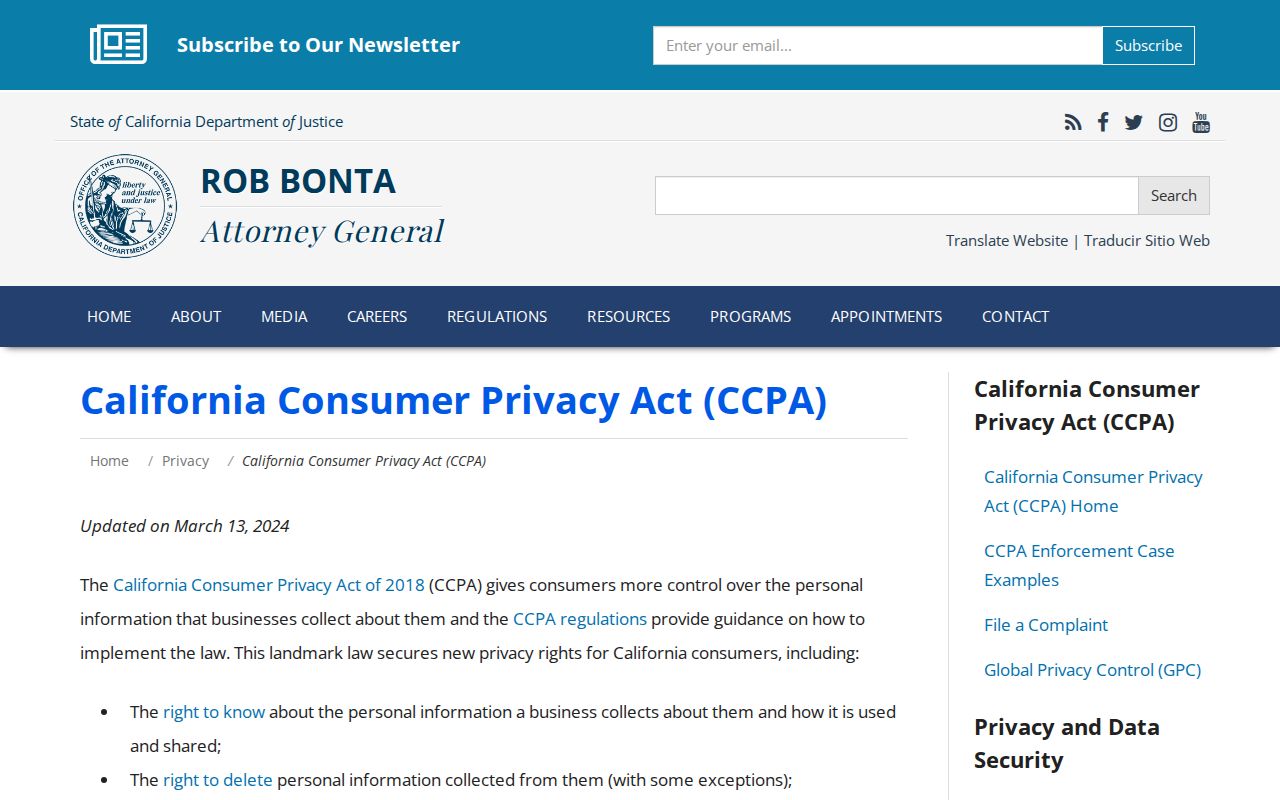
The state privacy source frames deletion and correction rights without turning an opt-out into a public-record removal.
A consumer who needs to report a business issue can use the California consumer complaint route.
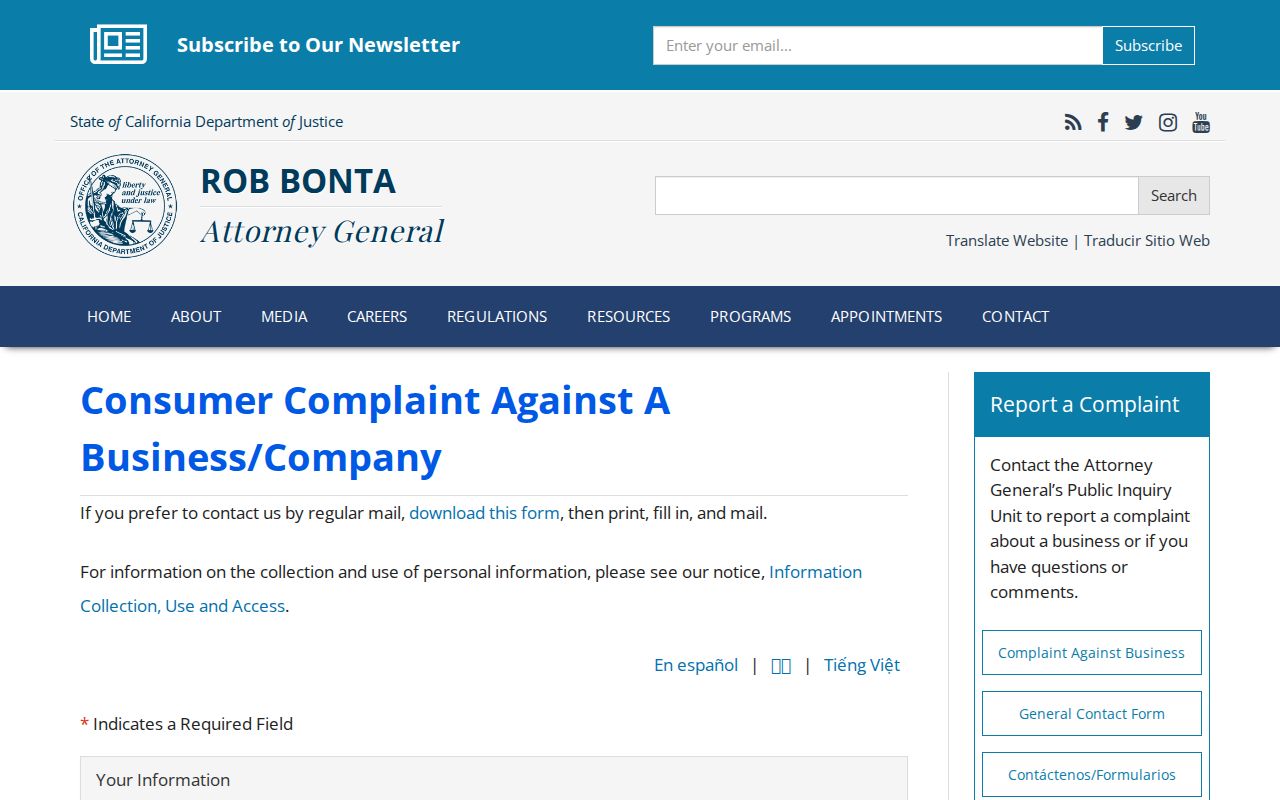
Keep complaints, correction requests, and record searches with the office that owns each disputed field.
Lawful use. Public availability does not authorize stalking, surveillance, threats, impersonation, or harassment. California Penal Code section 646.9 addresses stalking, and a resident lookup should stay within personal, lawful research.
El Monte Resident Records Online
Use the custodian’s fallback channel when a search stops at a paywall, a missing image, or a protected field. The El Monte City Clerk’s CPRA form asks for the requester, a record description, and a month-and-year range. Inspection is free; copies cost $0.15 per page after the first ten pages. The California Public Records Act, Government Code sections 7920.000 and following, does not require an agency to create a new resident list or answer an open-ended question.
For a county record, contact the named RR/CC or court records desk. For a city permit, license, code, or police record, ask El Monte by exact address, case or permit number, record type, and date range. The final resident lookup step is to ask the record custodian for the narrowest identifiable file. If the concern is fraud or identity theft, report it through official channels rather than confronting a person named in a search result.
The El Monte public-record request form supplies the city’s documented request fields.
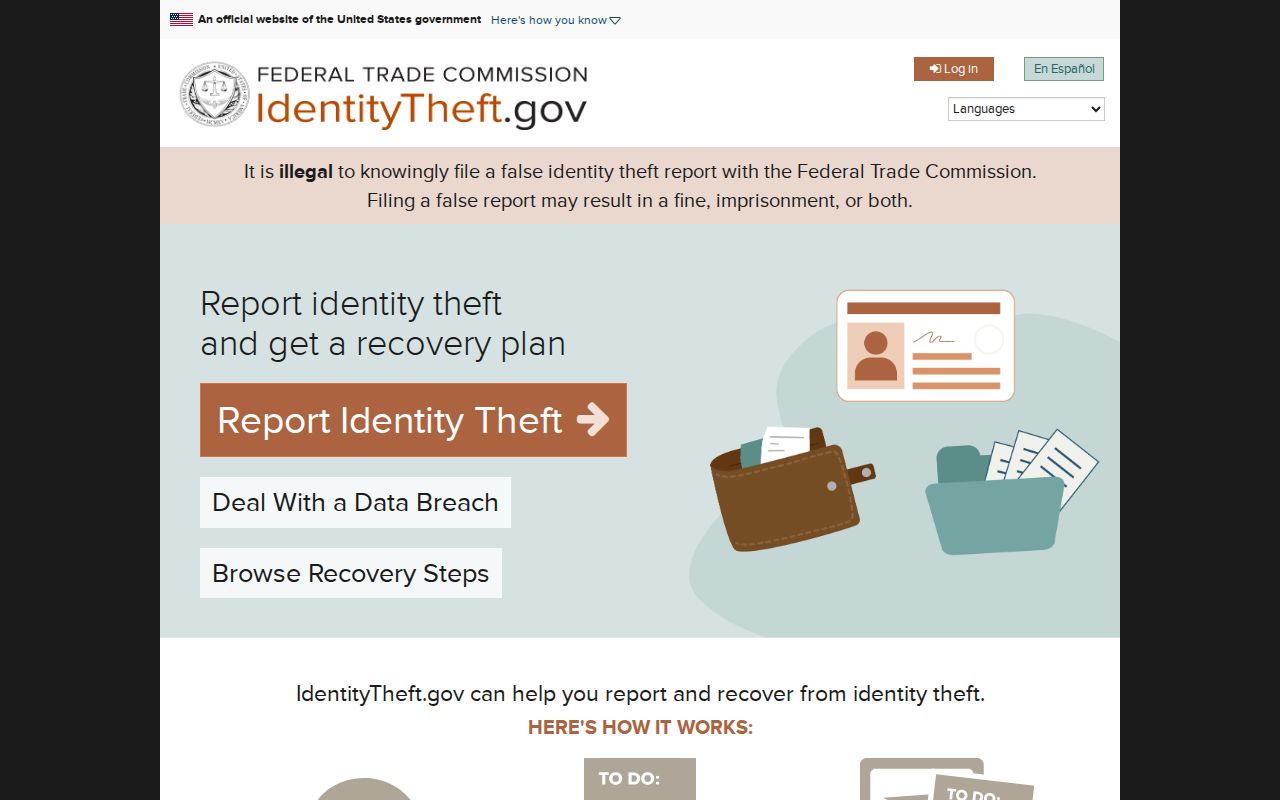
The federal identity-theft response route helps preserve a safe, official next step.
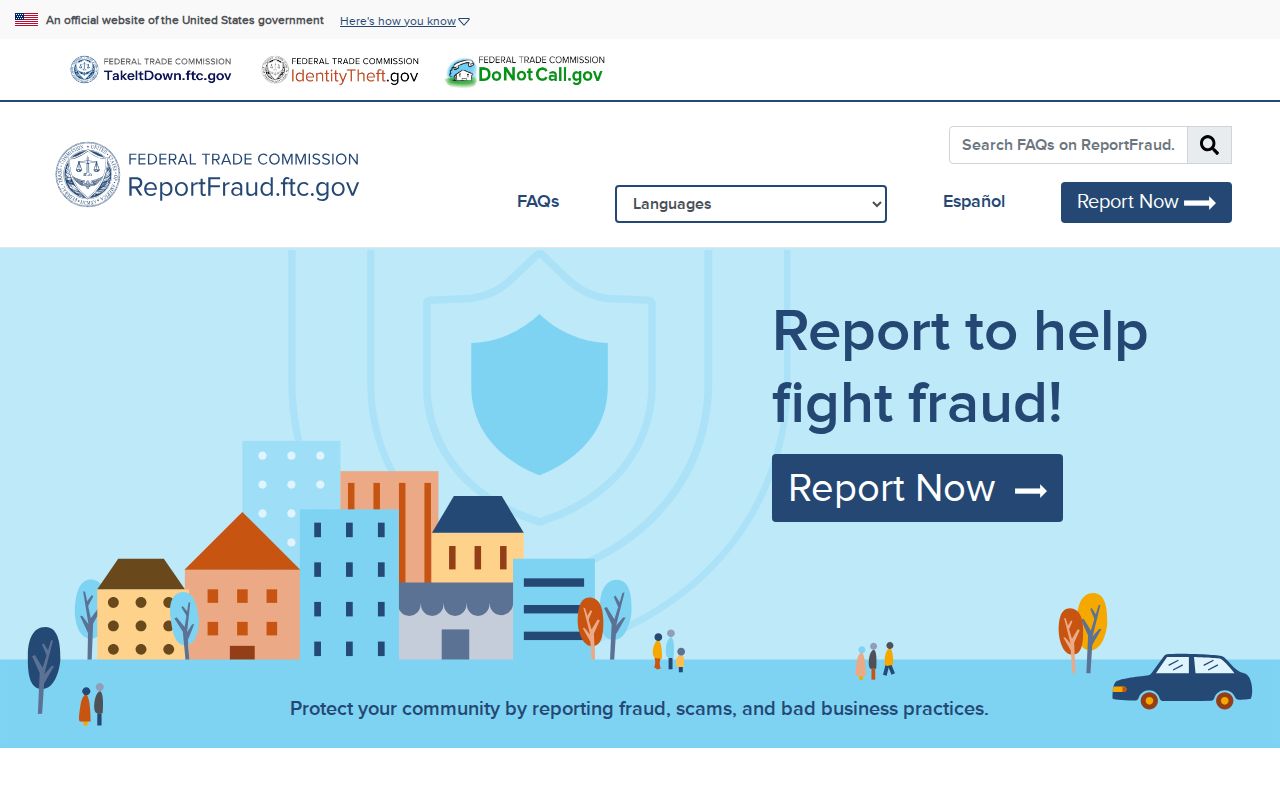
The Federal Trade Commission fraud report is separate from a record correction and should not be used to label a same-name person without evidence.
For internet-enabled crime, use the FBI Internet Crime Complaint Center route. Give the official report channel the transaction or incident facts it requests, rather than trying to resolve a name match through a public search.
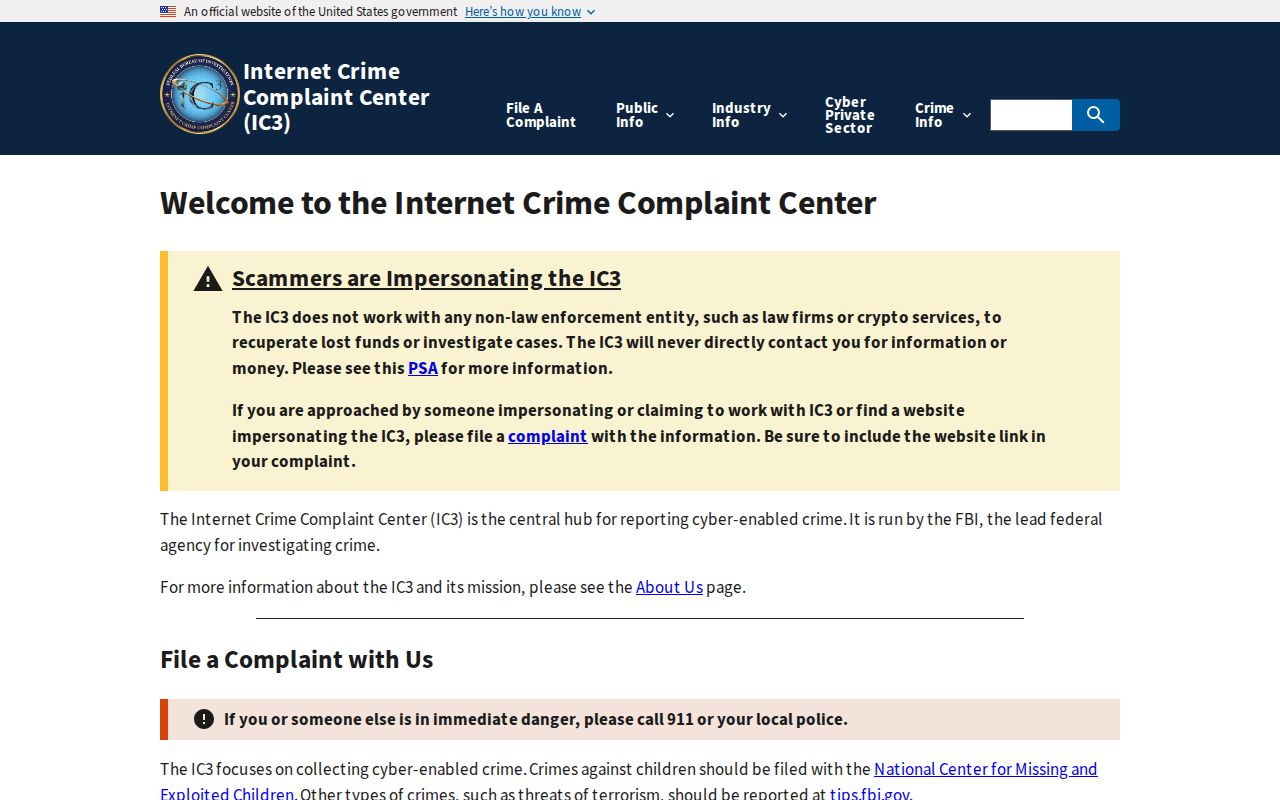
The IC3 route adds a formal reporting option when the concern is an online crime, not a shortcut to another person’s private records.